Sound familiar?
- The basement floor drain gurgles or backs up when the washing machine drains
- More than one fixture is slow at the same time: toilet, tub and floor drain
- A plumber "cleared the line" and it backed up again a few weeks later
- Sewer smell in the basement with no obvious cause
- A soggy patch or a sinking spot on the lawn or walkway above the line
- You own an older home and the main drain has never been looked at
One slow sink is usually a local clog. When several drains act up together, or the same backup keeps coming back, the problem is usually in the main sewer line itself.
What goes wrong with a sewer line
Most Ottawa homes built before the 1970s were connected with clay, cast iron or early plastic pipe. After 50 to 80 years underground, those lines fail in a few predictable ways:
- Tree roots find their way in through joints and hairline cracks, then grow into a mat that catches everything flushed down.
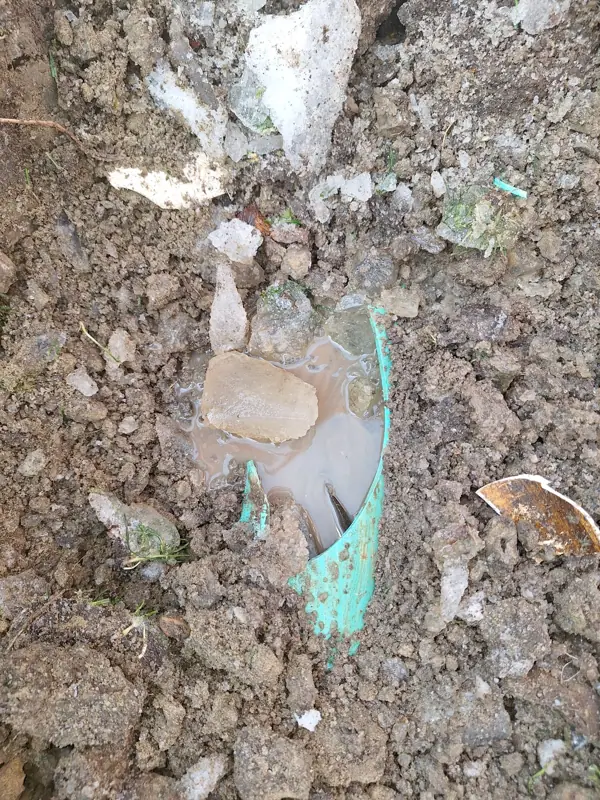
- Cracks and breaks from frost, settling soil or heavy vehicles. Water leaks out, soil washes in.
- Sags (bellies) where the ground under the pipe has settled. Waste sits in the low spot and builds up.
- Collapsed sections where an old pipe has simply given up.
How we find out: camera first, no guessing
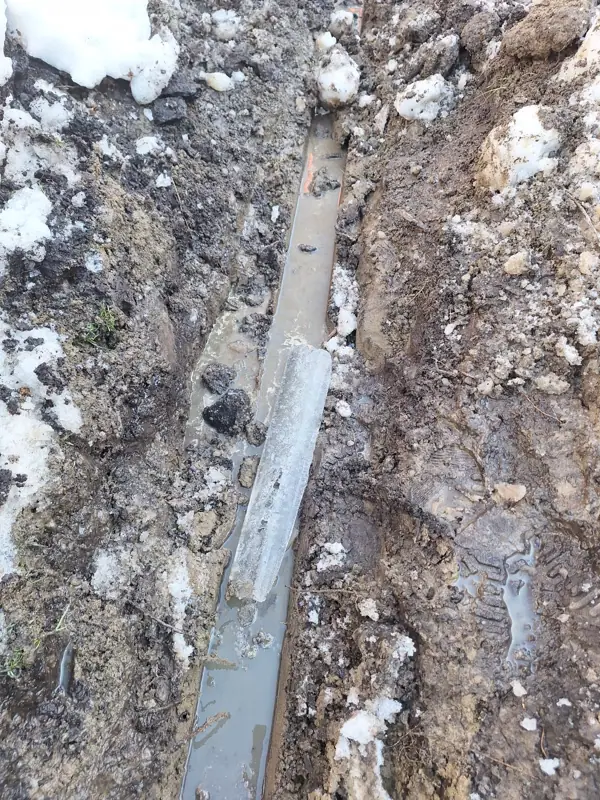
Before we recommend anything, we run a waterproof camera down the line from a cleanout or the floor drain. You watch the screen with us. We note the depth and distance of any problem, so we know exactly where to dig, and only there. If the camera shows a clean line with ordinary build-up, we'll tell you that too. A cleaning may be all you need.
Not sure if it's the drain or the sewer line?
We'll put a camera down the line and show you what's there before you spend money on repairs.
Your options, from least to most invasive
| Option | When it fits | What it involves |
|---|---|---|
| Cleaning (cabling or jetting) | Grease, scale or light roots in a pipe that's otherwise sound | A few hours, no digging. Camera after to confirm. |
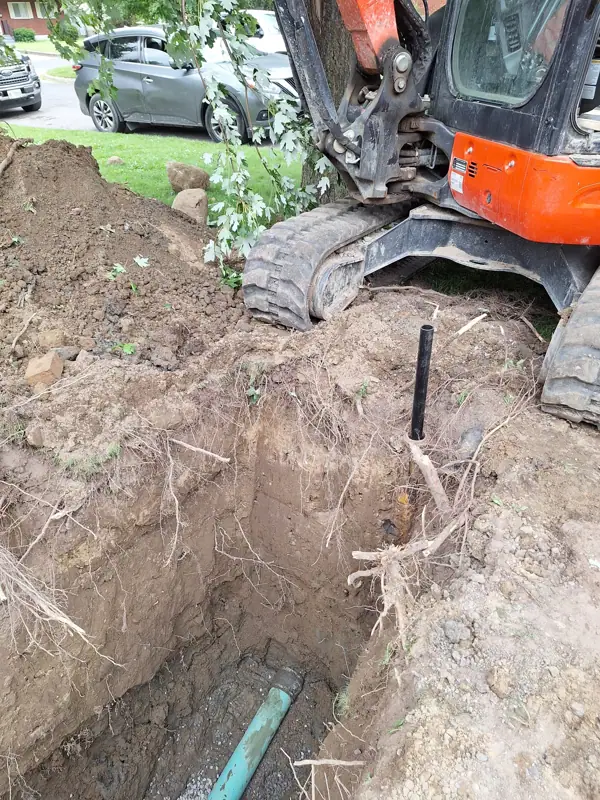
| Spot repair | One broken or root-filled joint in a line that's otherwise in good shape | One small excavation at the problem spot |
| Trenchless lining | A cracked line that still holds its shape, with access at both ends | Little or no digging; a new pipe is formed inside the old one |
| Full replacement | Collapsed, badly sagging or failed pipe, or an old line that keeps failing | New pipe from the house to the property line, dug and bedded properly |
Trenchless repairs don't suit every line. They need a pipe that still holds its shape, and they can't fix a sag. If trenchless won't work for your line, we'll tell you why on the camera footage rather than sell it anyway.
What a sewer line repair costs in Ottawa
Every job is priced in writing after the camera inspection. What moves the price:
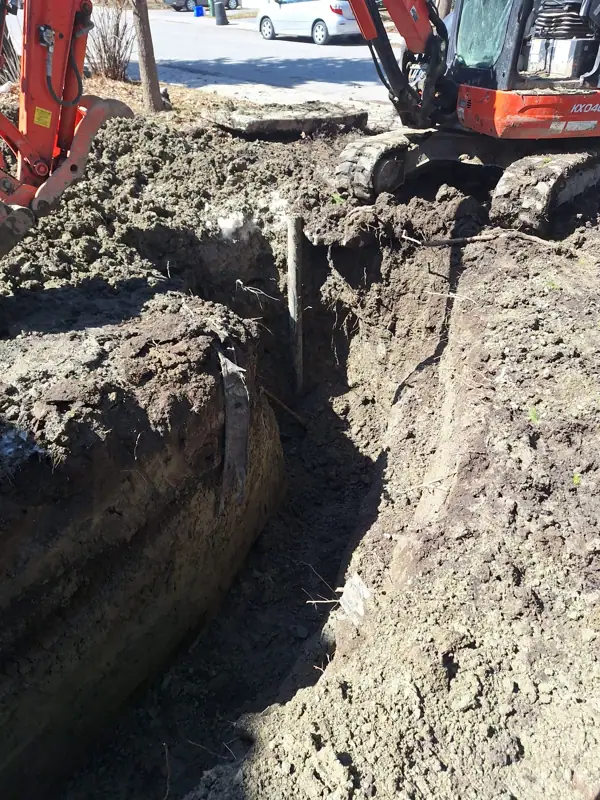
- Length and depth. Ottawa sewer lines often sit below the frost line, and deeper means more digging and shoring.
- What's on top. Lawn, interlock, a driveway, a porch, or mature trees.
- Access to the house end. Through the yard, or through the basement wall and floor.
- Permit and inspection, which we include.
A full main sewer line replacement on a typical Ottawa home is often around $9,000. A spot repair or a cleaning is a fraction of that. You'll see the number, and what it includes, before any work starts.
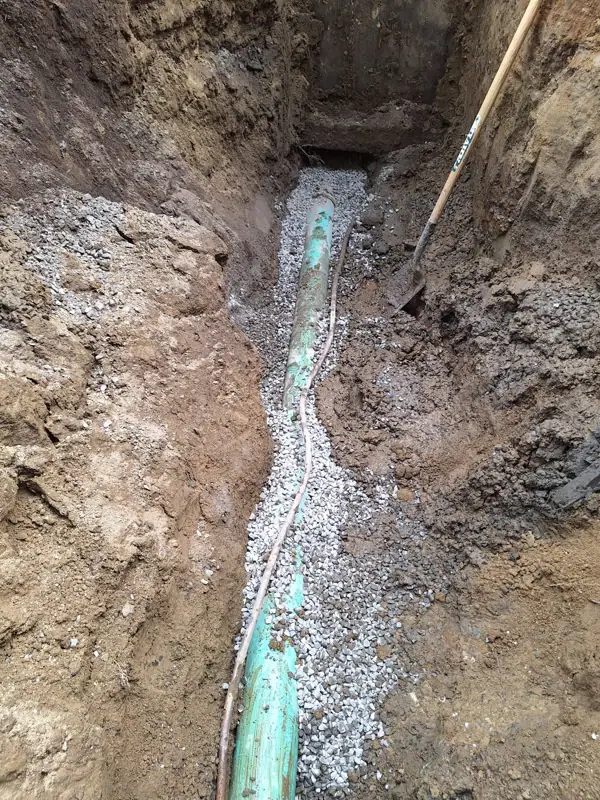
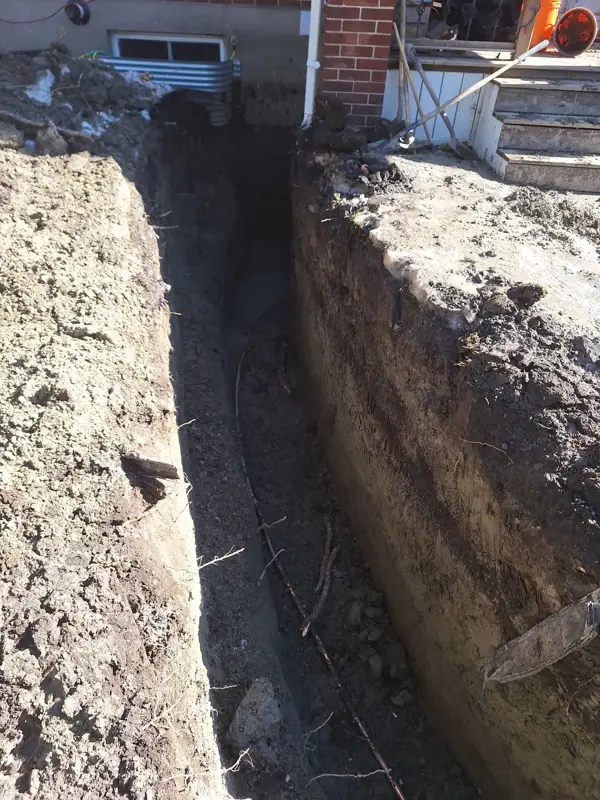
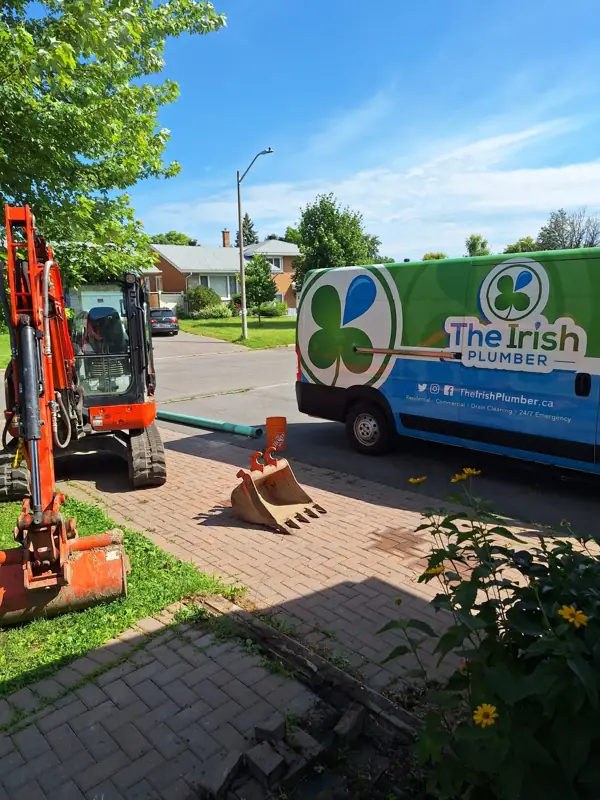
How a replacement runs
- Locates and permit. Utility locates (Ontario One Call) and the building permit come first.
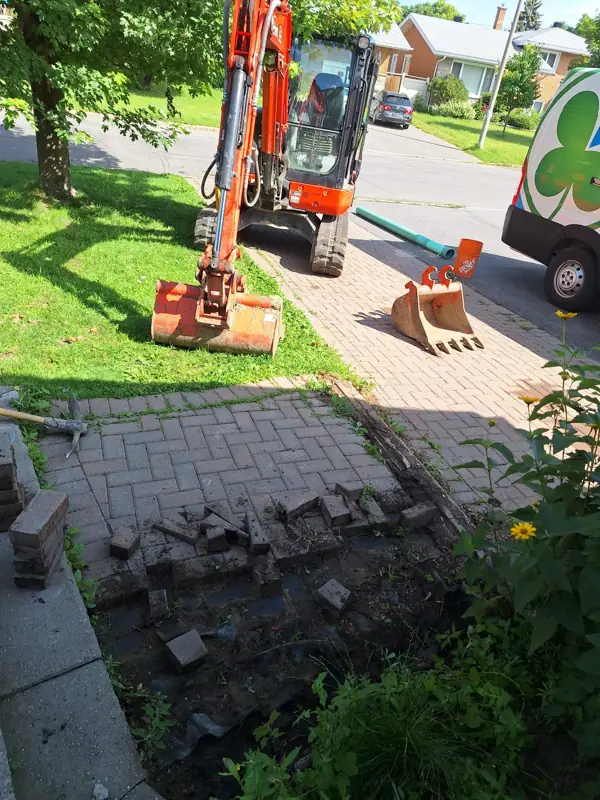
- Protect the property. We plan the trench route around walkways, porches and trees where we can, and set aside sod and interlock to put back.
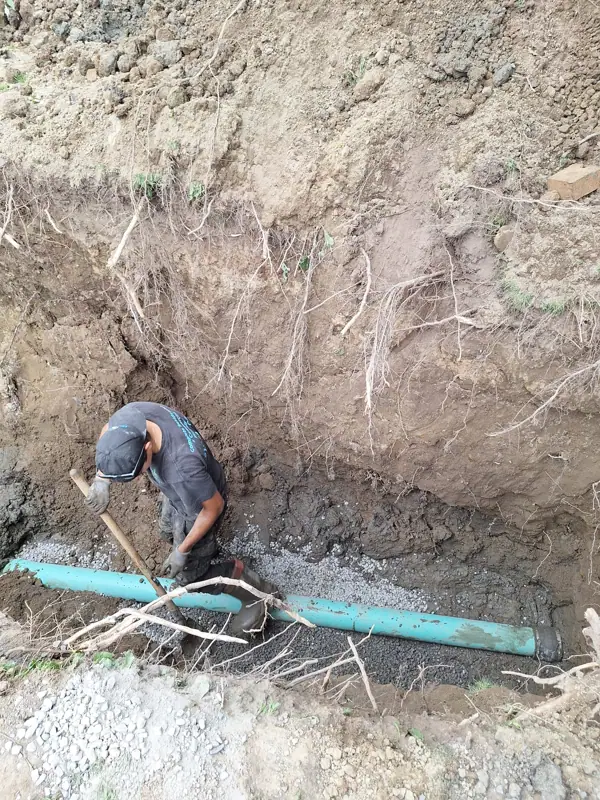
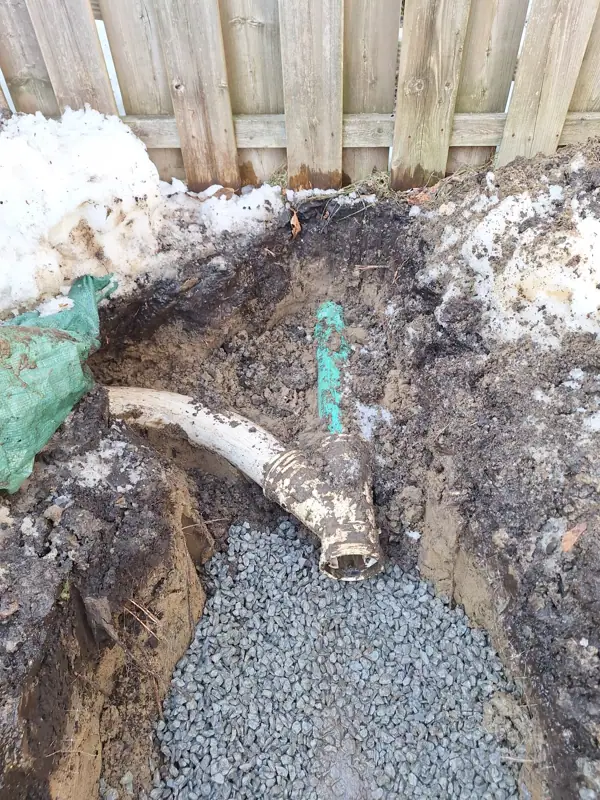
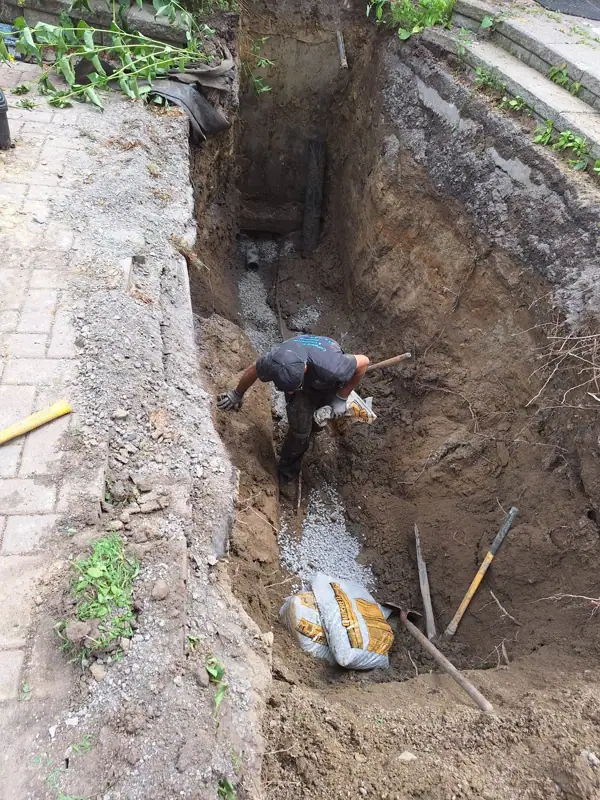
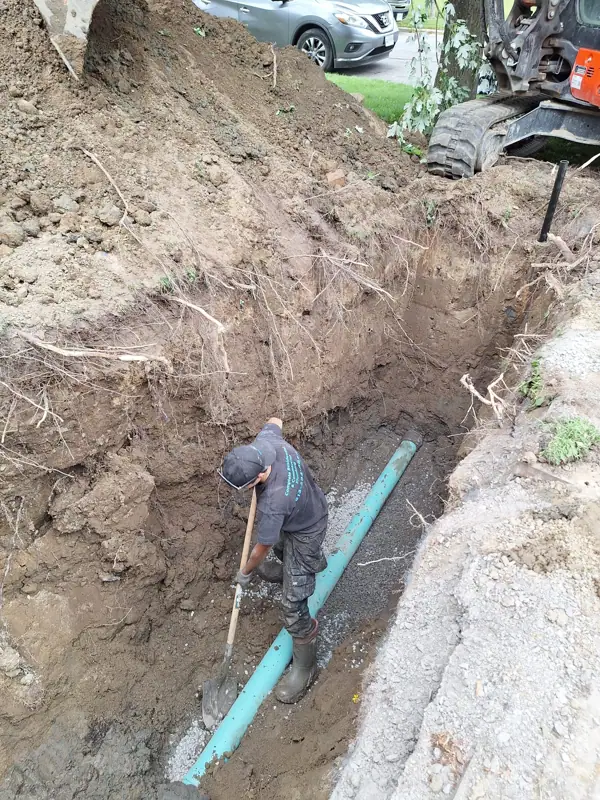
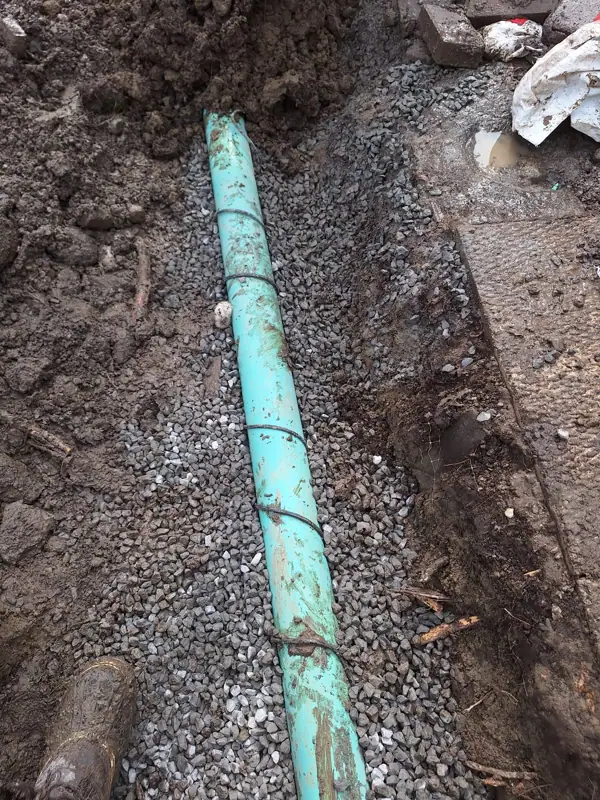
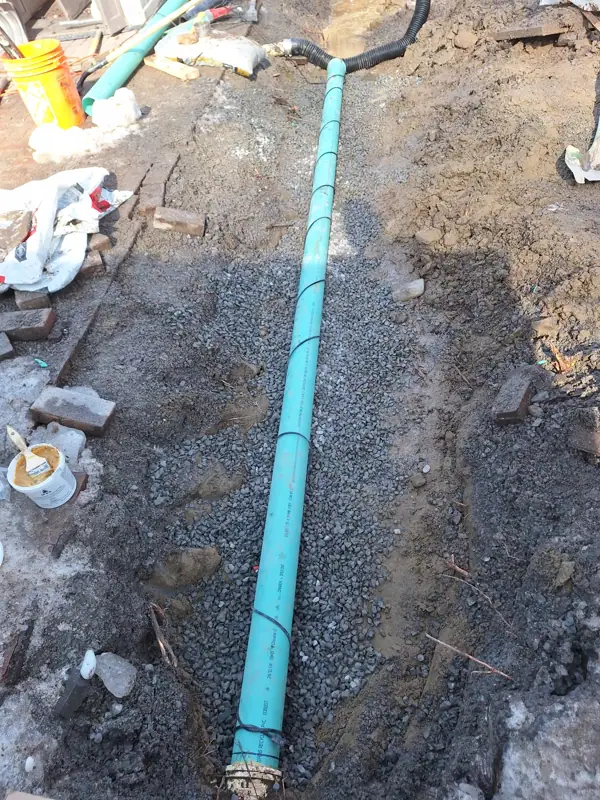
- Dig, remove, replace. New PVC sewer pipe on proper gravel bedding, at the right slope, with a cleanout for future access.
- Inspection. The City inspects the open trench before we backfill.
- Backfill and restore. We compact the trench, put interlock and sod back, and clean up the site.
Most full replacements take two to three days. One customer's 70-year-old line was replaced, along with a sewage pump for a downstairs bathroom, in three days, as promised.
Who owns which part
You're responsible for the sewer line from your house to the property line. The City is responsible from the property line to the main under the street. If our camera shows the damage is on the City's side, we'll show you the footage and tell you who to call. We've done this for customers before.