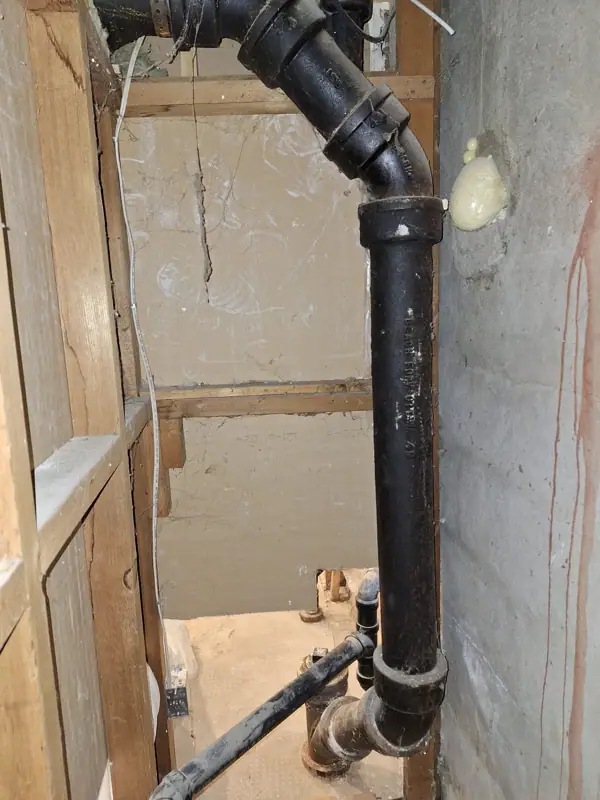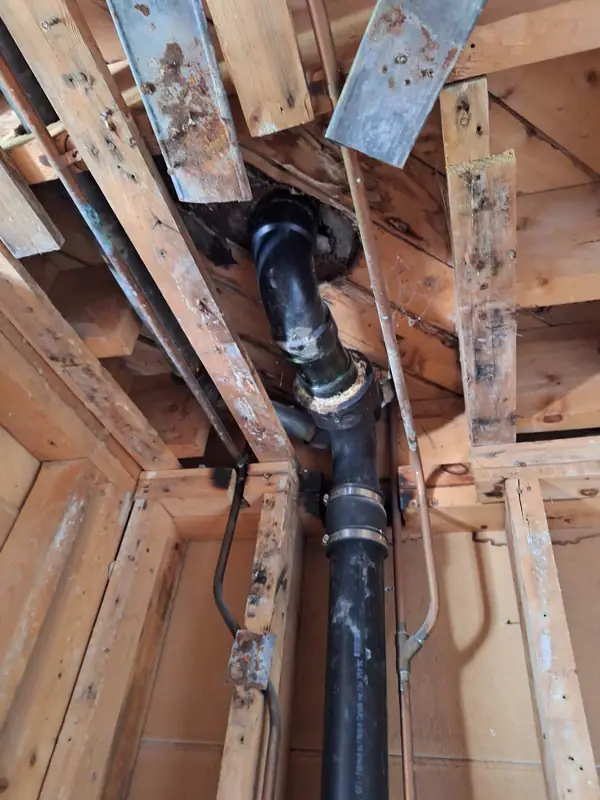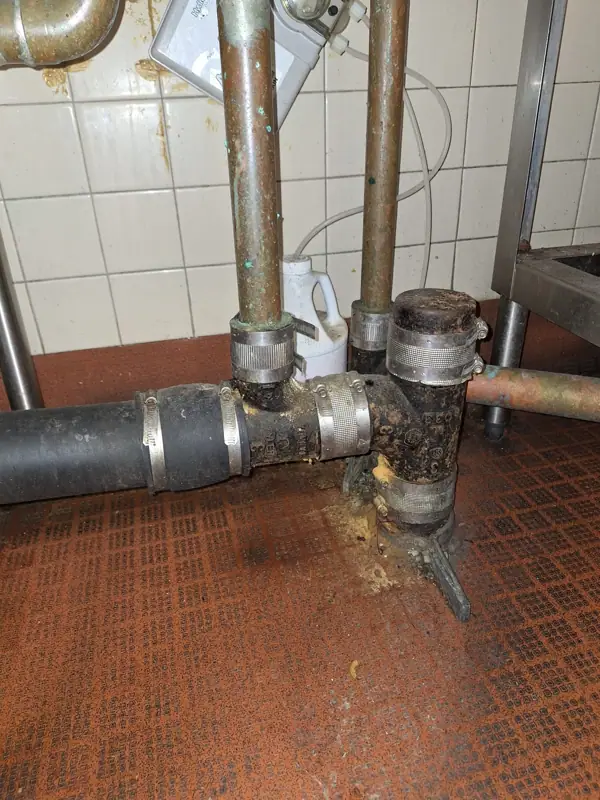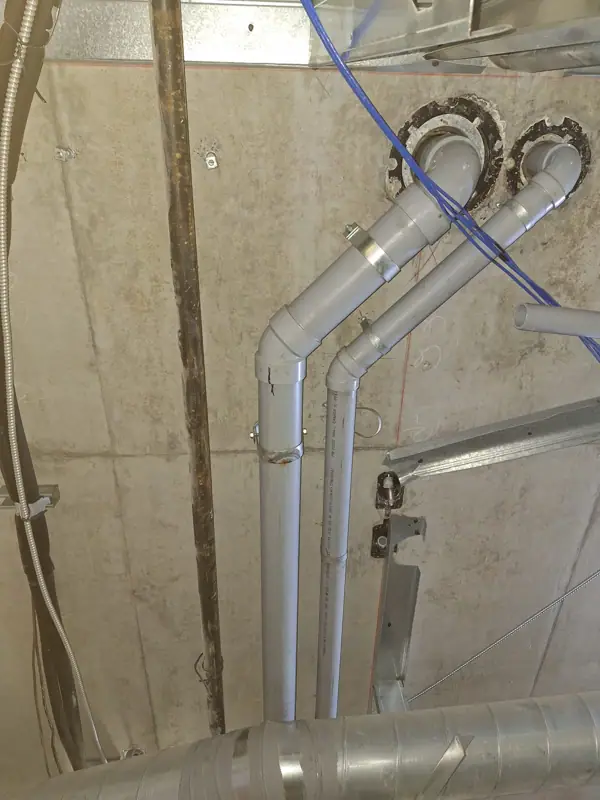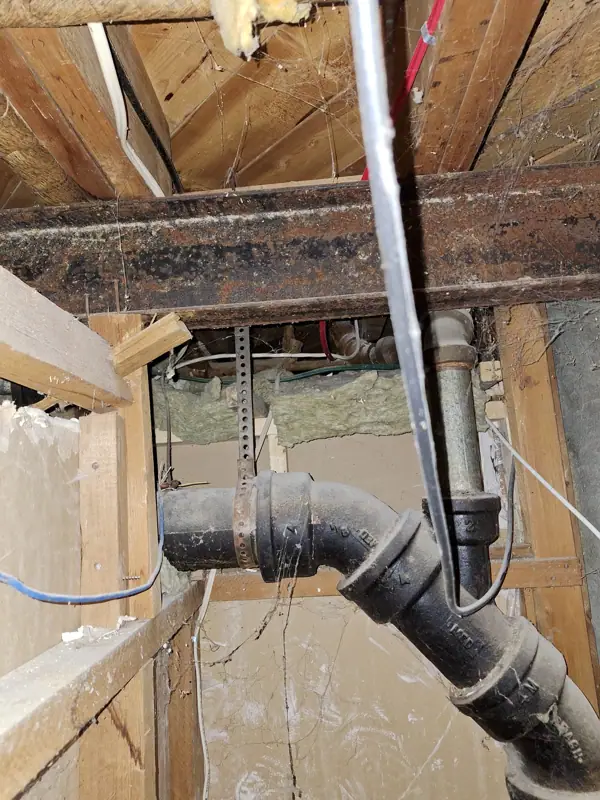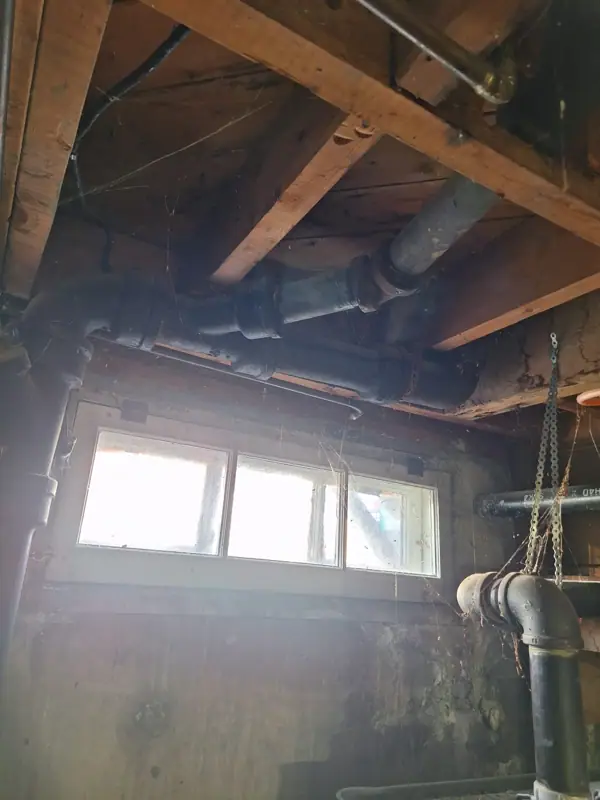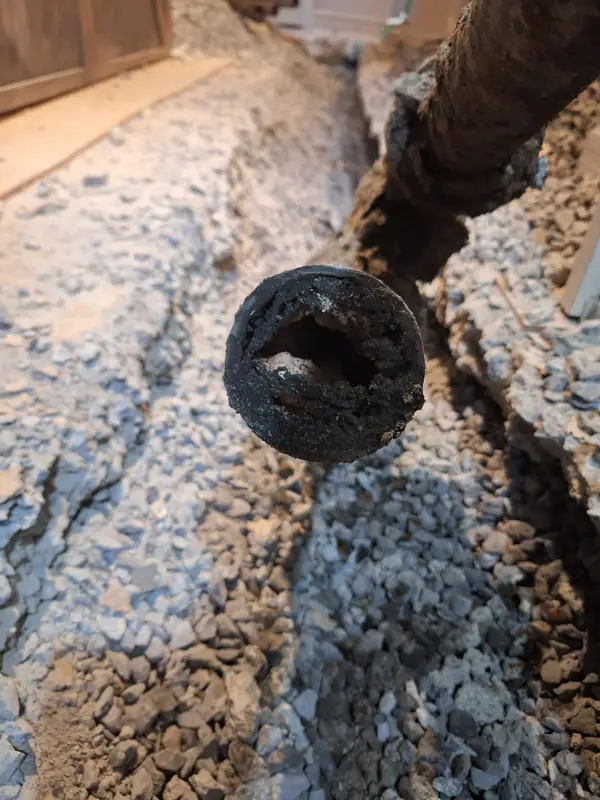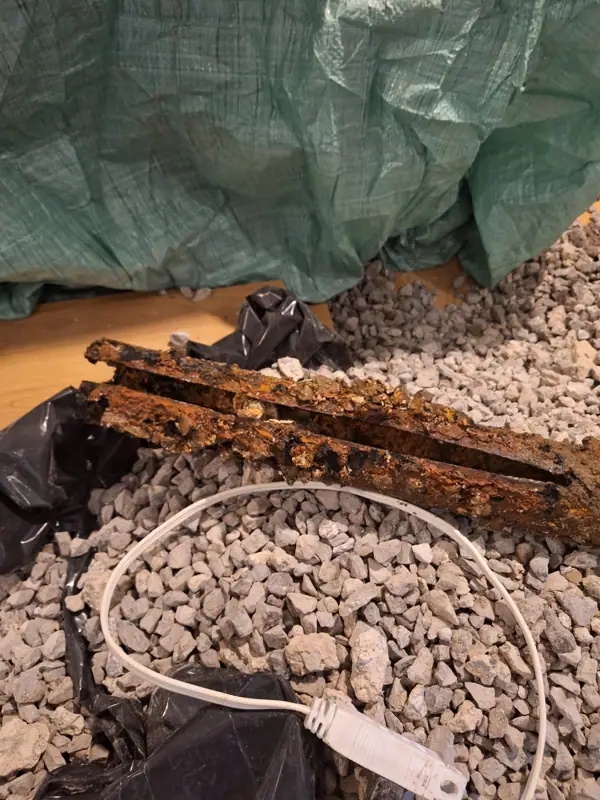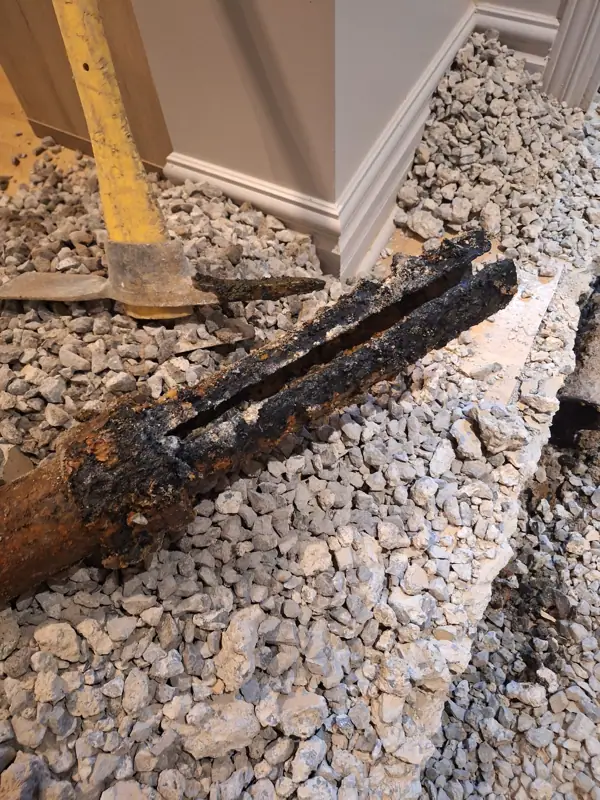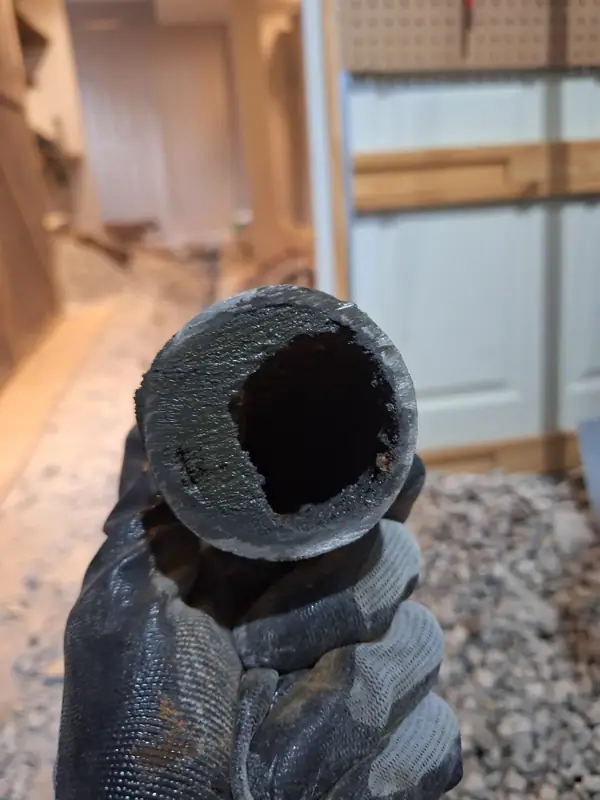
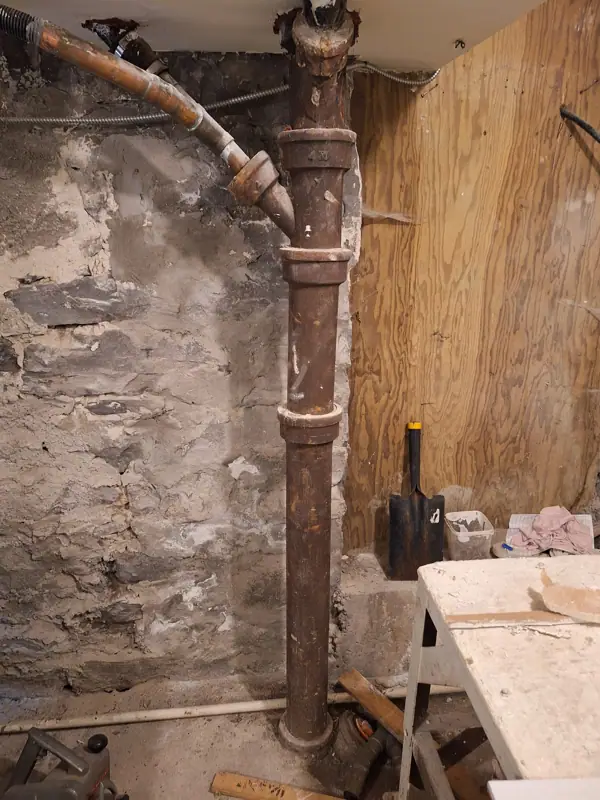
Signs your cast iron is failing
- Rust-coloured weeping, stains or crusty patches on the stack or drain pipes
- A crack or split you can see, often along the bottom of a horizontal pipe
- Slow drains and repeat clogs, because rough, scaled pipe catches everything
- Sewer smell near the stack or floor drain
- A ceiling stain under a bathroom
- Your house was built before about 1970 and the drains have never been replaced
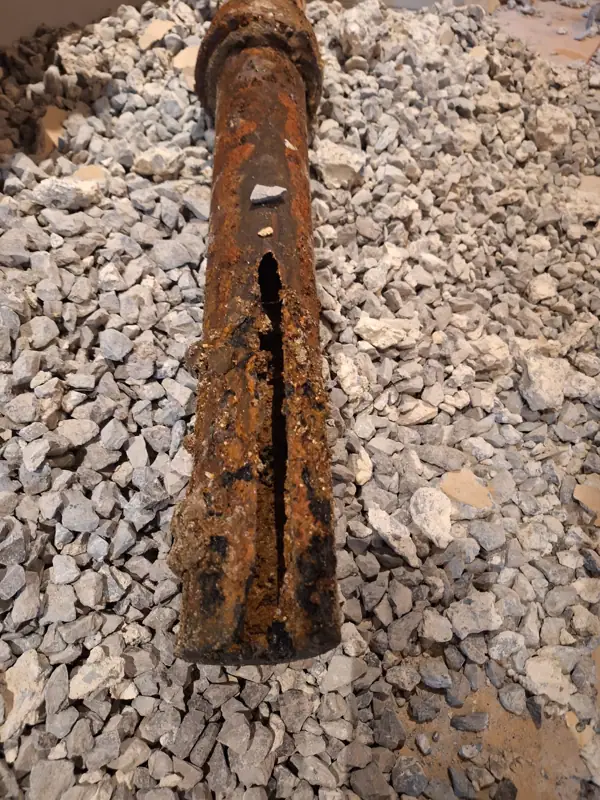
Why cast iron fails
Cast iron drains were standard in Ottawa homes until the 1970s, and many have lasted 60 to 100 years. Over time the inside corrodes and scales, which narrows the pipe. The bottom of horizontal runs thins out where water sits, and joints loosen. Pipe under the basement floor often fails first, because you can't see it until it lets go.
Stack, building drain or both?
- The stack is the vertical pipe that runs from the roof to the basement. Every toilet and drain in the house ties into it.
- The building drain runs from the base of the stack, usually under the basement floor, out through the foundation to the sewer line.
We camera both and tell you which parts are sound and which aren't. Sometimes replacing a failed section is enough. Sometimes the whole system is near the end and it makes sense to do it once, especially before a renovation closes the walls.
How the replacement works
- Camera and plan. We map what's there and agree the scope and price in writing.
- Protect the house. Floor protection, dust containment, and a plan for which toilets and sinks stay usable each day.
- Open up only what's needed. Wall access at the stack, and the basement floor where the building drain runs.
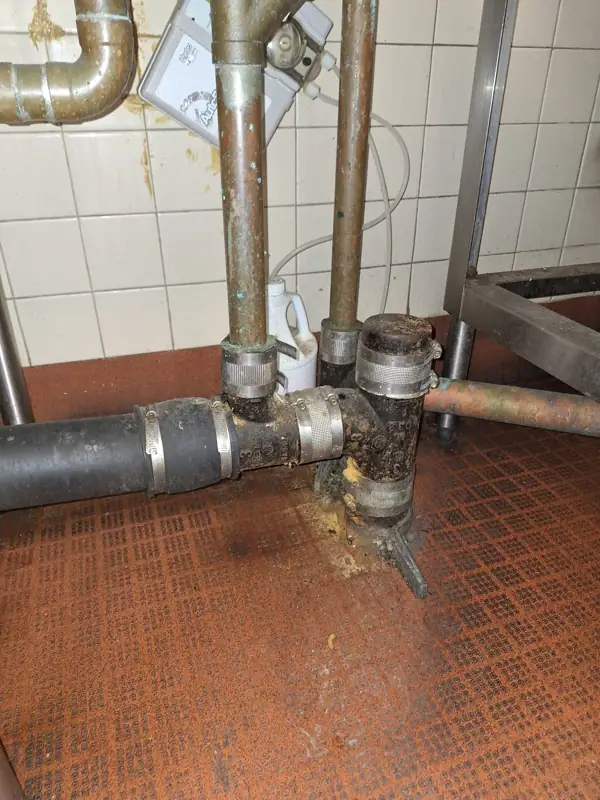
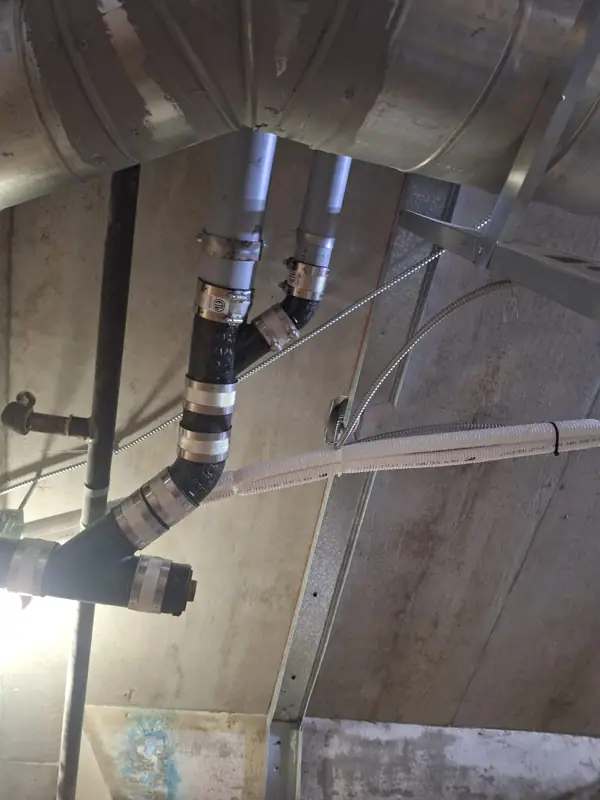
- Install ABS. New pipe and fittings to code, properly supported and vented, with a cleanout.
- Inspect and restore. Permit inspection, concrete re-poured, access closed up, site cleaned.
A stack replacement usually takes one to two days. A stack plus a building drain under the floor is often two to five days, depending on the house. One customer's 80-year-old pipe ran under boulders and took five days, and they still wrote that we explained everything along the way.
Is it time to replace your cast iron?
We'll camera your stack and drains and tell you honestly what needs doing now and what can wait.
What it costs
Pricing depends on how much pipe is replaced, how many fixtures tie in, and how much floor or wall has to be opened. Replacing an old cast iron drain under a basement floor is typically around $4,500. A full stack-and-drain job costs more. You get one written price that includes the permit, the concrete and the clean-up.
Planning a renovation?
Replacing cast iron before new drywall and flooring go in is far cheaper than opening finished walls later. We regularly schedule around renovation contractors and finish while the walls are still open.