Backwater Valve Installation in Ottawa

A backwater valve stops City sewer water from coming back up into your basement. We pull the permit, install the valve, pass the inspection, put your floor back and help you claim the City's rebate of up to $1,000.

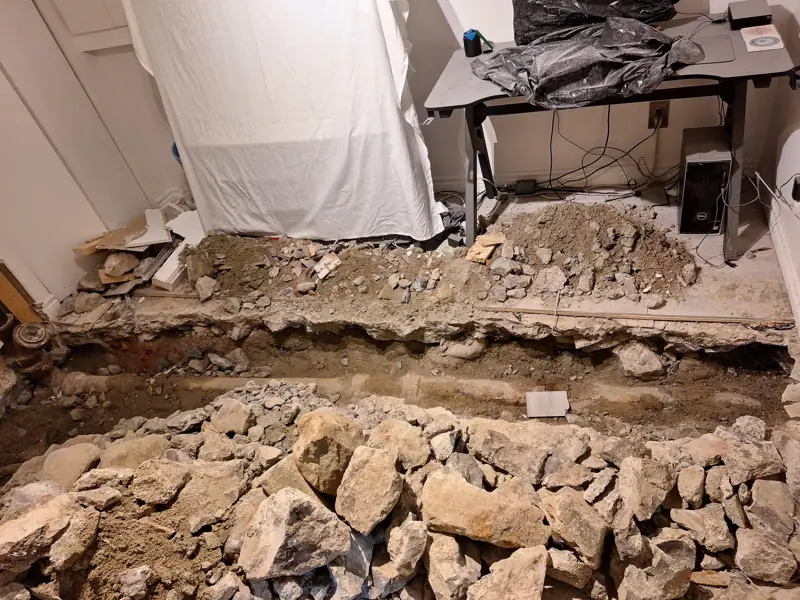
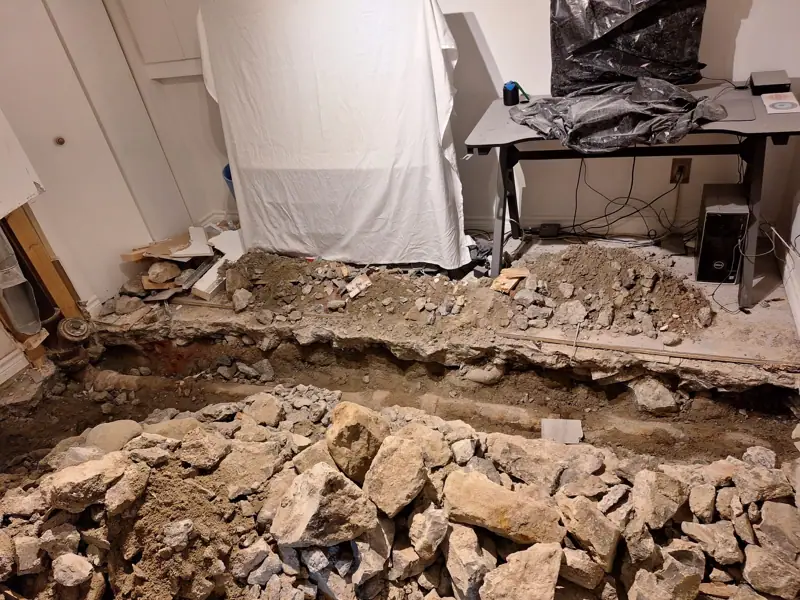
Basement room with the floor opened up for a drain and backwater valve installation

How a backwater valve protects your basement

During heavy rain or a fast snowmelt, the City sewer can fill faster than it drains. When that happens, sewage can flow backwards up your sewer line and out of the lowest drain in your house, usually the basement floor drain.

A mainline backwater valve sits in your building drain under the basement floor. Normally it stays open so your house drains freely. When sewage starts flowing back, a flap closes and holds it out. When the sewer drains down, it opens again.
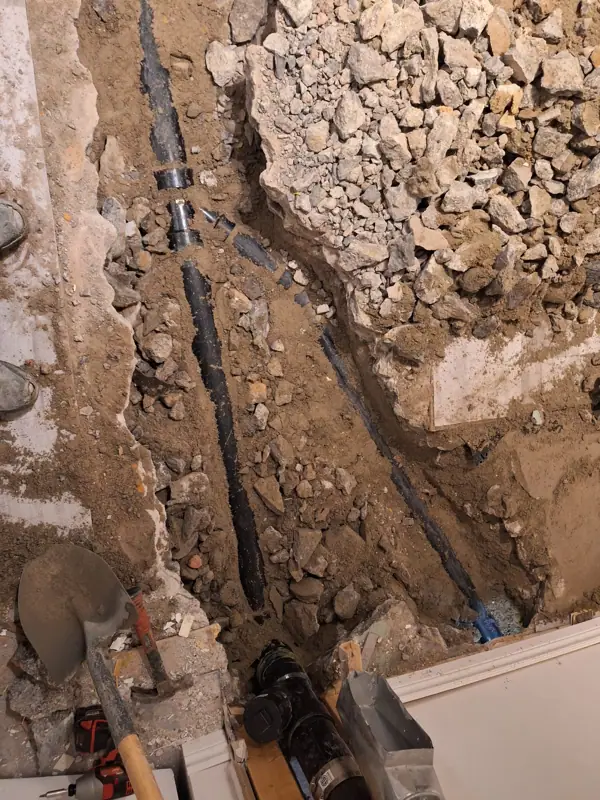
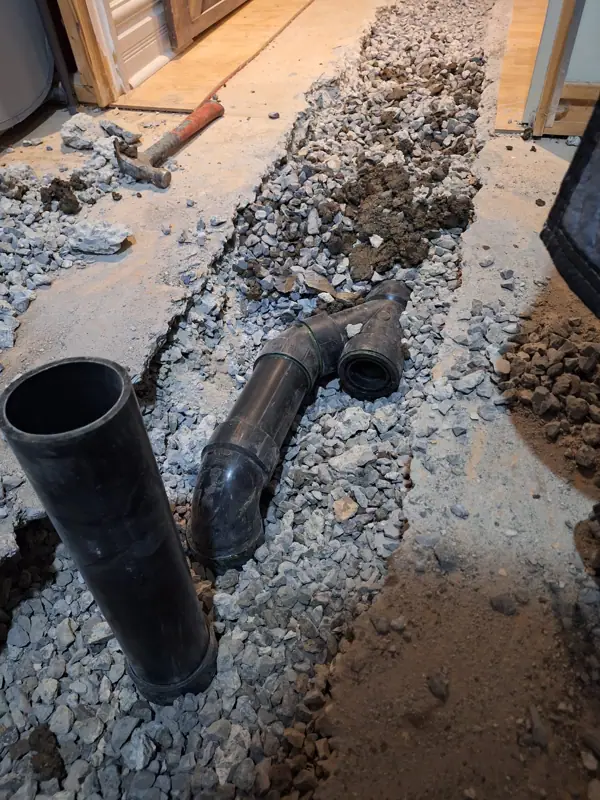
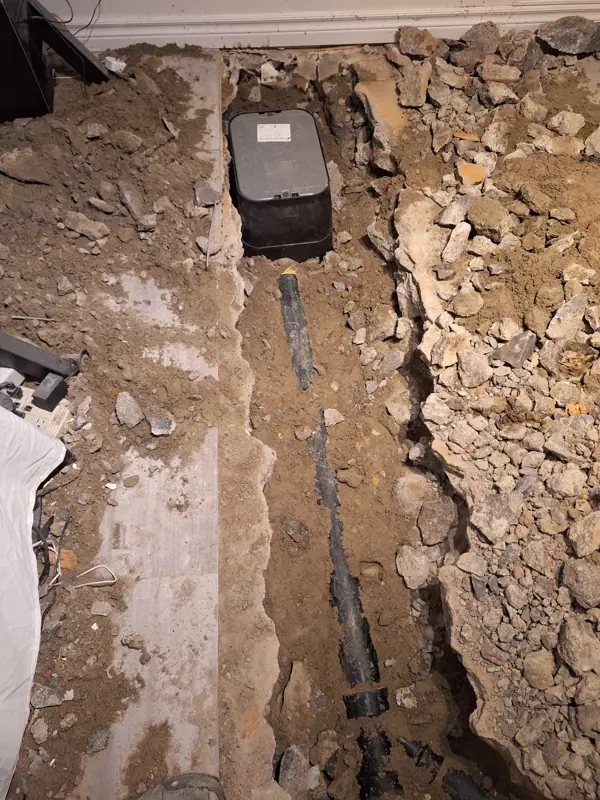
Dark pipework and a coupling exposed within an opened interior floor surrounded by rubble.
Drain connection exposed in the floor trench, where a backwater valve ties into the building drain

Do you need one?

A backwater valve makes sense if:

  • Your basement is finished, or you plan to finish it
  • Your floor drain has ever backed up during a storm
  • Your neighbours have had sewer backups
  • Your insurer asks for one, or offers a discount for having one
  • You're opening the floor anyway, for a drain replacement or a rough-in

A backwater valve stops sewer backup. It doesn't stop groundwater coming in through the walls or floor. That's what a sump pump and weeping tile handle. If you're not sure which problem you have, our basement check covers both.

The City rebate, and the order that matters

up to $1,000Indoor sanitary backwater valve
up to $1,500Sump pump with battery backup, existing pit (primary or secondary)
up to $3,000Sump pump with battery backup and a new sump pit
up to $1,000Storm backwater valve (indoor)
up to $2,500Outdoor storm backwater valve
100%of the building permit fee

City of Ottawa Residential Protective Plumbing Program. The City pays the lesser of the maximum or the actual cost. Homes built before January 1, 2004 qualify for storm-side work and before January 1, 2012 for sanitary-side work. Replacing a device you already have doesn't qualify. Apply within one year of the permit. Source: ottawa.ca.

The single most common rebate mistake is installing before the permit. The permit has to come first. We pull it, install the valve to the City's standards, book the inspection, and give you the itemized invoice, permit and inspection report you need to apply.

Find out if your home qualifies

We'll check your eligibility and quote the install, permit and restoration in writing.

How the install runs

  1. Camera the line. We confirm the condition of your building drain and where the valve should go. If the old pipe is failing, you'll want to know before we cut.
  2. Permit.
  3. Cut the floor. A neat opening at the valve location, with dust control.
  4. Install the valve. A normally-open mainline valve, set level, with an access box so it can be inspected and cleaned.
  5. City inspection.
  6. Concrete and clean-up. Floor restored flush, with the access cover left in place.

Most installs are done in one to two days, plus the inspection.
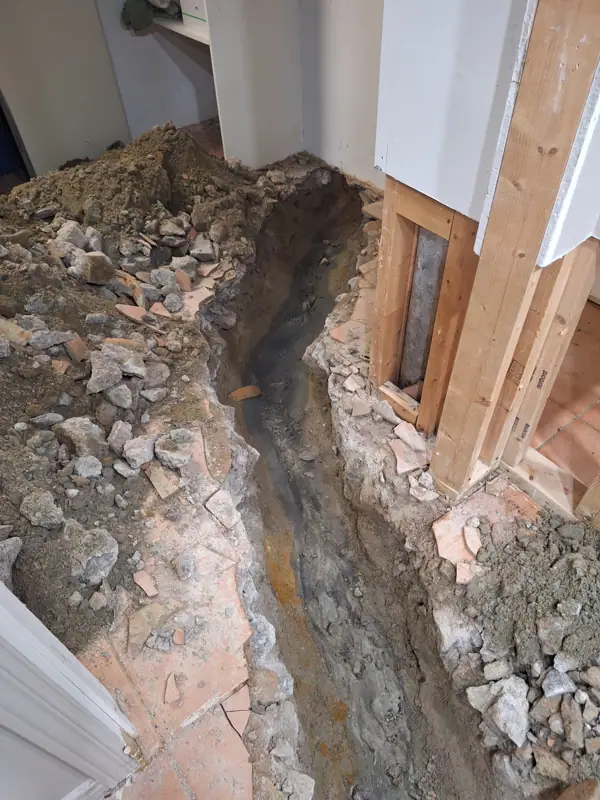
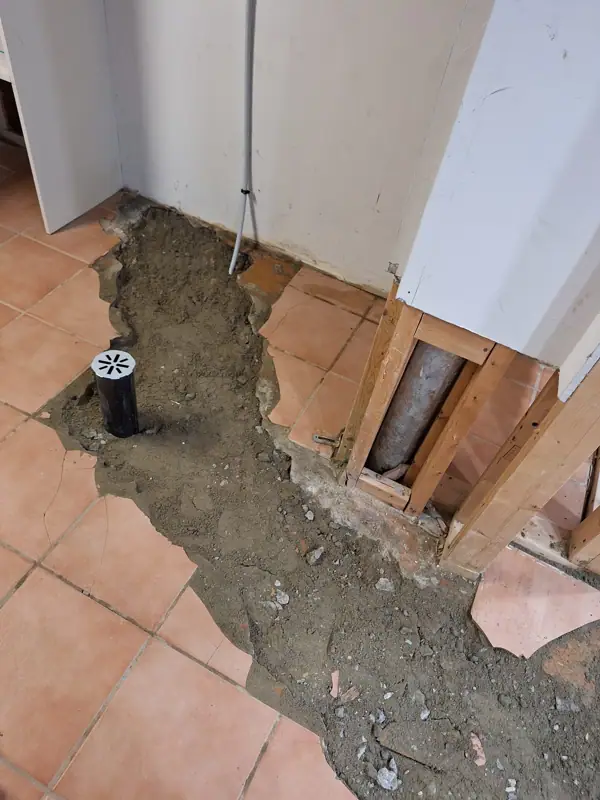
Excavated floor trench passes through a tiled doorway beside exposed wall studs.
Trench through a tiled doorway to reach the drain
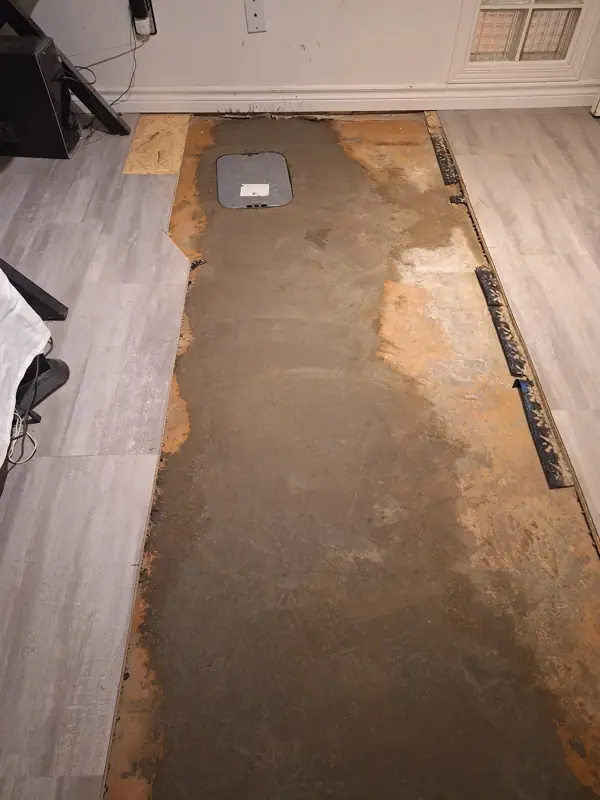
Wide room view showing a long concrete floor patch and a rectangular access cover.
The room afterwards, with the concrete patch finished

What it costs

Installed backwater valves in Ottawa commonly run $1,500 to $3,000 including the permit, depending on how deep the drain is and what's in the way. Eligible homes can then claim up to $1,000 back from the City. You get our price in writing before anything is cut.

Looking after your valve

Open the access cover once or twice a year, check the flap moves freely, and clear any debris. We'll show you how when we finish. Don't put anything heavy over the cover.
From our basement protection jobs

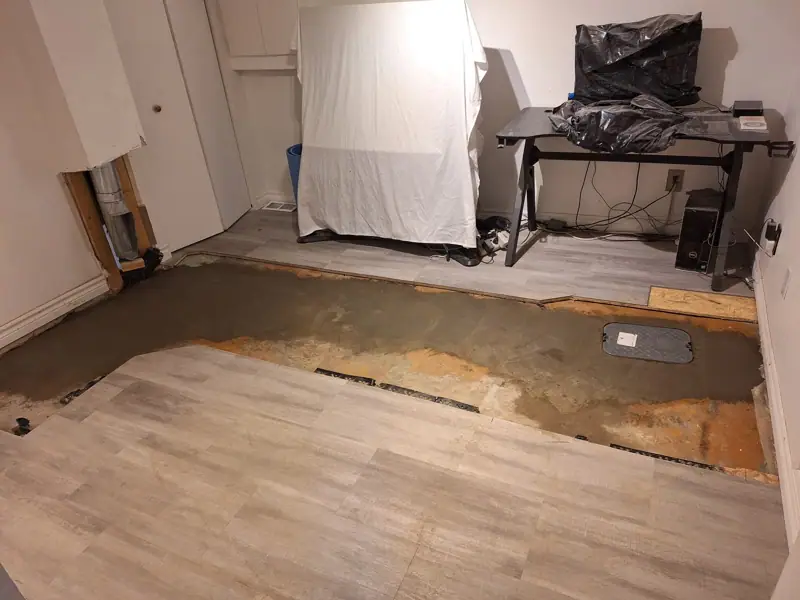
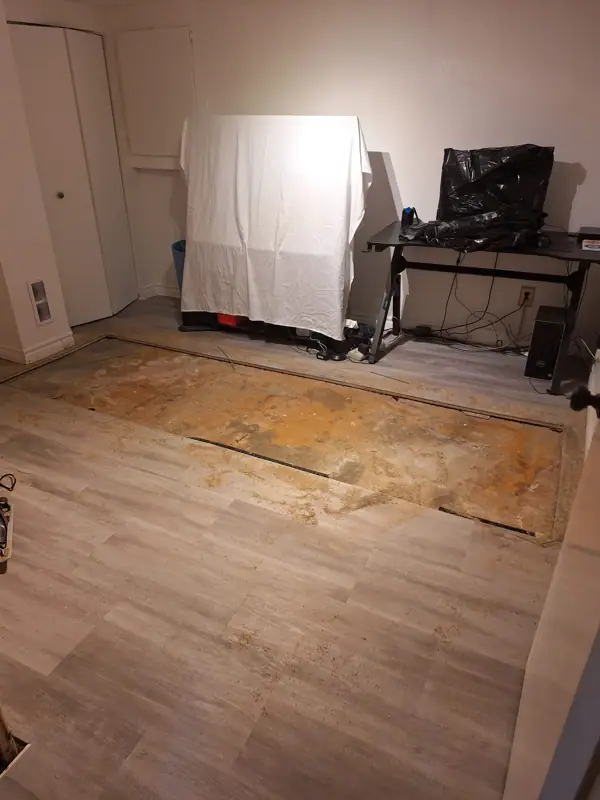
Room overview with a strip of floor finish removed near covered furniture; work stage is unverified.
Floor finish lifted before cutting
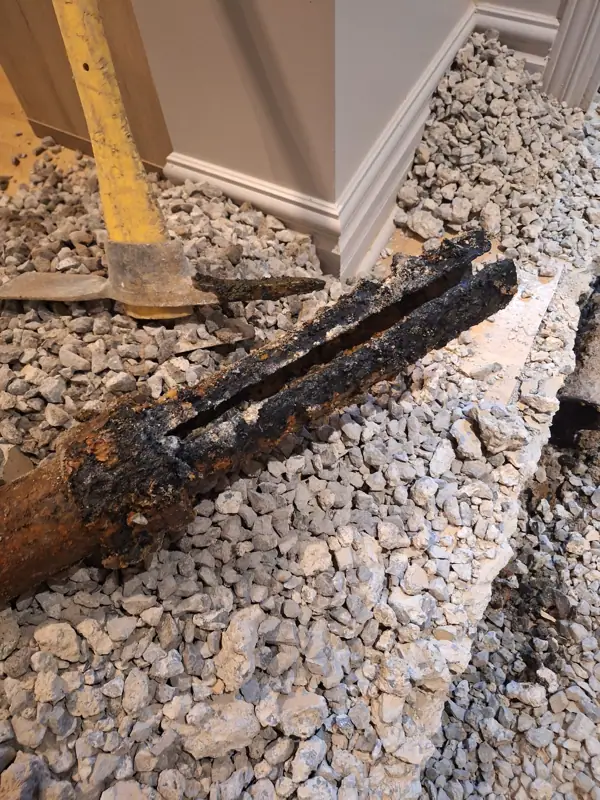
Long old pipe section split along its length lies next to a floor excavation.
Old split pipe found beside the opened floor
Black drain branch with vertical riser set in an opened floor surrounded by gravel.
New drain branch and riser in the trench
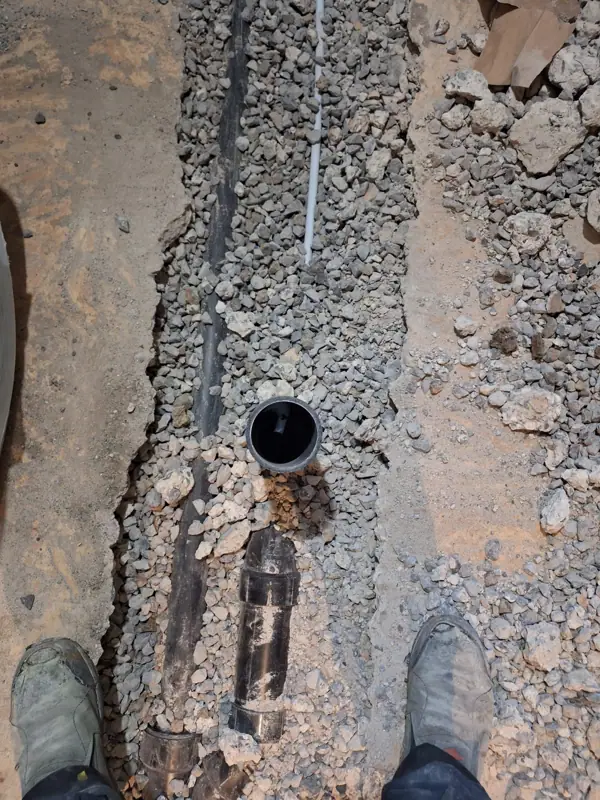
Looking down at a black upright access riser and drain fittings in gravel bedding.
Looking down the new drain run before the concrete goes back
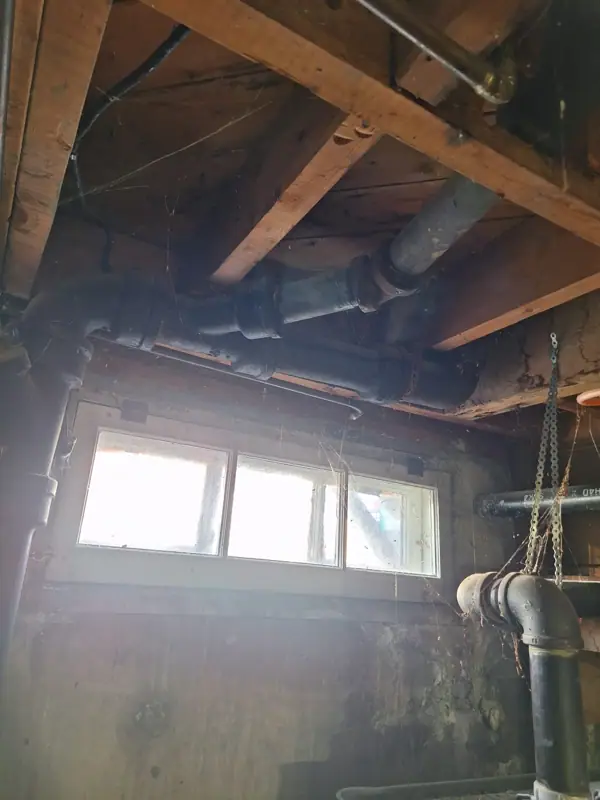
Dark drain piping runs beneath open joists above a basement window; backlit view.
Overhead basement drain piping by window
Fresh-looking concrete strip with a rectangular access cover between existing floor finishes.
Patched floor with rectangular access cover
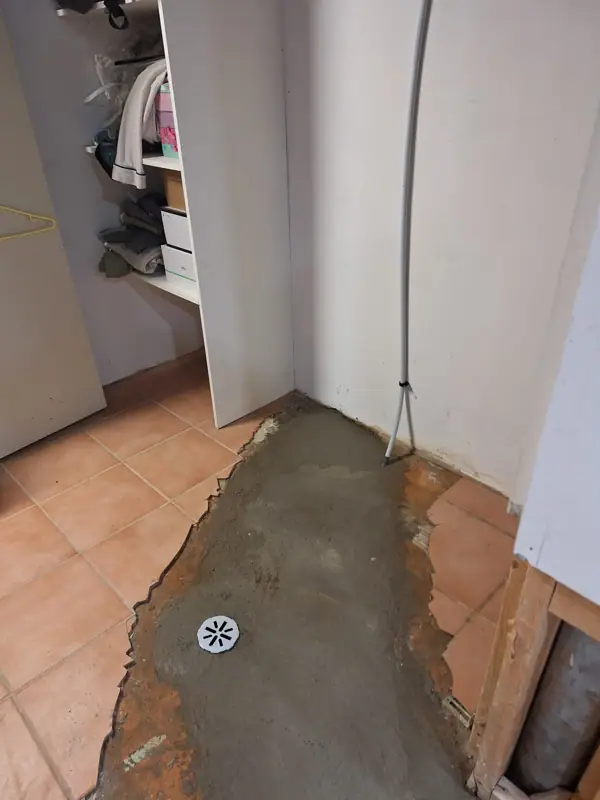
Concrete floor patch around a round drain grate beside a tiled doorway and open wall.
Concrete patch around floor drain
Branching concrete patch through a tiled floor with a round drain grate and exposed wall edge.
Branching concrete floor patch with grate
Rectangular black access box and drain piping in an opened floor; backwater-valve function is unverified.
Rectangular access box in floor excavation
Long trench across a room with broken concrete in the foreground and covered furniture behind.
Room excavation with rubble foreground

See all basement protection photos

What customers say about this work

★★★★★
“Michael was very helpful and professional. Install of a laundry connection and basement backflow valve. Adapted to a change in plan very quickly when we decided to put the laundry in a different spot. He still managed to finished ahead of schedule and cleaned up thoroughly afterwards.”
KnobbyGoogle review, 2021
★★★★★
“Michael from The Irish Plumber was excellent! He was here because my basement flooded on July 1, 2026. His professionalism and his honesty was outstanding!”
D S.Google review, 2026
★★★★★
“As part of a project to finish a basement, the scope of plumbing work to be contracted out included: digging around roughed in drain for bathtub and toilet, connecting the bath tub drain, installing tub and shower valve, providing water supply lines for bath, toilet, vanity, and a kitchenette sink.”
Justin A.Google review, 2022

Read more reviews

Questions Ottawa homeowners ask us

How much does a backwater valve cost in Ottawa?
Installed with the permit, commonly $1,500 to $3,000 depending on depth and access. Eligible homes can claim up to $1,000 back from the City. We quote in writing before work starts.
How do I get the City of Ottawa backwater valve rebate?
Get the building permit before installation, have the valve installed to City standards, pass the inspection, then apply within one year of the permit with proof of ownership, the itemized paid invoice, the permit and the inspection report. We handle the permit and give you the paperwork.
Is my house eligible?
For a sanitary backwater valve, homes built before January 1, 2012 are eligible. Replacing a valve you already have isn't covered.
Will a backwater valve stop all basement flooding?
No. It stops sewage backing up from the City sewer. Groundwater coming through walls and floors is handled by a sump pump and weeping tile. Our basement check tells you which risk your home has.
Will you wreck my basement?
No. We cut one neat opening at the valve location, contain the dust, and restore the concrete flush. The valve sits under an access cover you can open for maintenance.
Water is coming up my floor drain right now. What do I do?
Stop using water in the house: no laundry, dishwasher, showers or flushing. Move valuables off the floor and call us.

Sleep through the next big storm

A valve that keeps sewage out, installed in the right order so you get the City rebate. Your floor goes back the way it was.

Get Service(613) 294-0864