Sewers and drains in Nepean
Most of Nepean's older neighbourhoods were built as post-war suburbs with separate storm and sanitary sewers, cast iron or early ABS drains, and clay or early plastic laterals. After 40 to 65 years, the typical problems are cast iron failing under the slab, roots in the lateral, and floor drains that overflow in storms.
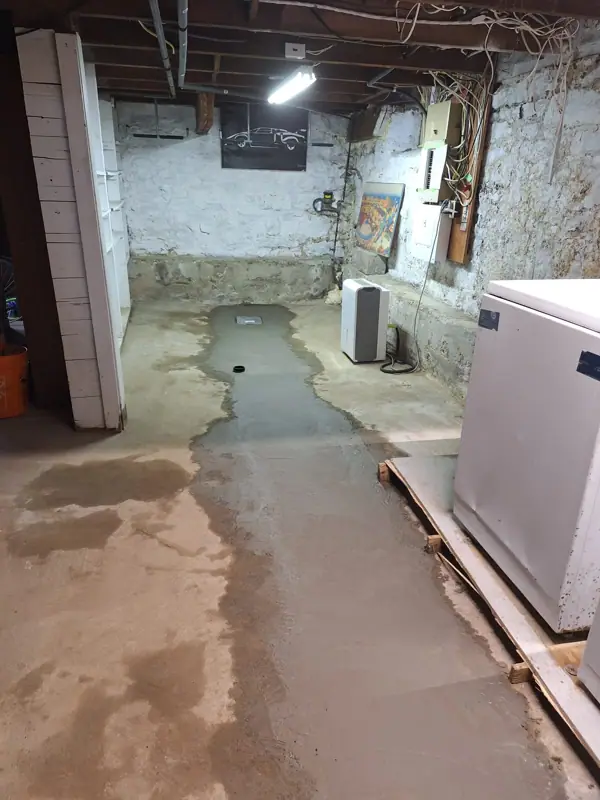
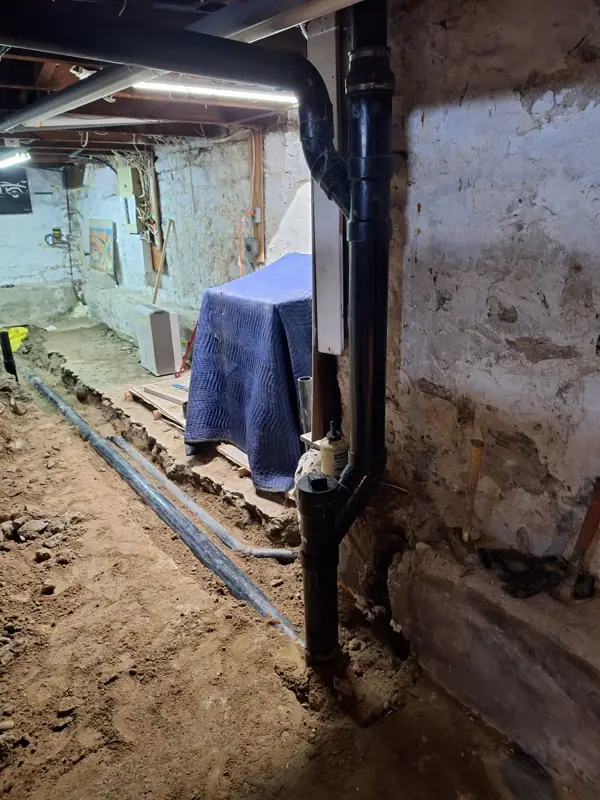
Many of these basements were finished long after the plumbing went in, which means the drain is under someone's carpet or tile. When a pipe under the floor fails, a careful, clean repair matters.
City works on your street
As Nepean's 1950s and 60s streets come up for City road, sewer and watermain renewal, the City replaces its pipes up to the property line. Your side is usually the same age. Ask us to camera your lateral before the new connection is made.
Many Nepean homes qualify for City rebates: up to $1,000 for a backwater valve (built before 2012) and up to $1,500 or $3,000 for a sump with battery backup (built before 2004).
Storms and basement flooding
The July 2026 Canada Day storm flooded hundreds of west-end basements, and parts of Nepean were in it. If your floor drain has ever backed up, a camera inspection before the next storm tells you whether it's your line or the City sewer surcharging.
Live in Nepean?
Tell us what's going on at your place. You get a clear answer and one written price before any work starts.
What's in your house, by the year it was built
The year a home was built tells us most of what's behind the walls and under the floor. Builders used the materials of their time, so one subdivision can share the same weak spots. Here's what we usually find in Nepean:
| Built | What's usually in the walls and under the floor | What to watch for |
|---|---|---|
| 1958 to mid-1970s | Copper water lines, cast iron stack and building drain, clay or early plastic lateral | Cast iron rotting under the slab; roots at lateral joints; no backwater valve |
| Late 1970s to mid-1990s | ABS drains, copper or Poly-B (grey "PB2110") supply lines, sump pits in many suburbs | Poly-B fitting failures and insurance limits; first-generation sump pumps; no backwater valve |
Buying a home here
Before you firm up an offer, ask for:
- A sewer camera inspection of the lateral from the house to the street. Replacing a failed sewer line is one of the biggest repair bills a homeowner can face.
- The water pipe material where it enters the house (lead before 1958; Poly-B in some 1980s and 1990s homes).
- A look at the sump and floor drain: age of the pump, battery backup, and whether there's a backwater valve.
- Any history of water in the basement, and what was done about it.
Already own here?
- Test your sump pump each spring and fall, and check the backup battery's age.
- If a floor drain has backed up even once, get the line cameraed before the next storm.
- If the City sends a renewal notice for your street, call us before their crew reaches your connection.
How old plumbing ties into new
Most homes here are a mix of eras: an original cast iron stack with an ABS bathroom added in the 1990s, or copper lines patched with PEX. That works when the joins are done properly. Cast iron to ABS needs the right transition couplings and support so the old pipe doesn't crack under the new. Copper or Poly-B to PEX needs the right fittings, not a quick crimp onto pipe that's already brittle. And a backwater valve has to go into the building drain at the right spot, with an access cover you can actually reach.
Why call Michael
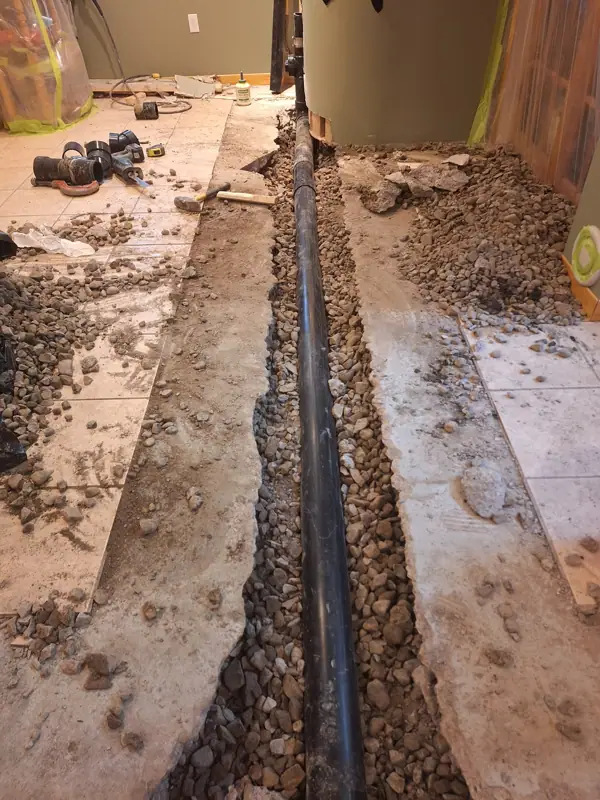
When the problem is under the basement floor or out under the lawn, most plumbers send you to someone else. We don't. Michael's crews cut the concrete, dig the trench, replace the pipe, pass the City inspection and put the floor back, in Nepean and every other part of Ottawa. One crew, one written price, and a 2-year workmanship warranty.